

Office Design 2026: Why Great Offices are No Longer About Desks
Office Design 2026: Why Great Offices are No Longer About Desks
For years, the discussion around the future workplace has focused on one question: Will people return to the office? Today, the answer is becoming increasingly clear. People are willing to come back—but only if the office offers something they cannot find at home.
At regroup architecture, we believe that successful offices are no longer designed around departments or fixed workstations. They are designed around people and the different ways they work throughout the day.
Already in 2022, we introduced our 5 Work Modes concept, recognising that every employee moves between different tasks, levels of concentration and forms of collaboration. Four years later, many of the latest workplace trends across Asia are reinforcing exactly this approach.
Rather than simply following trends, we see today’s workplace as the natural evolution of designing for human behaviour.
The Office as a Hospitality Experience
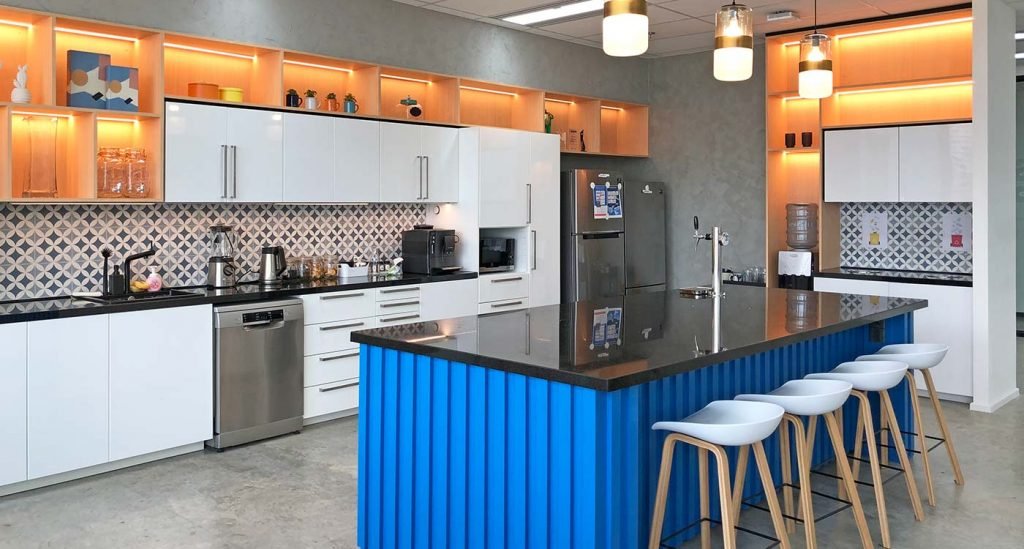
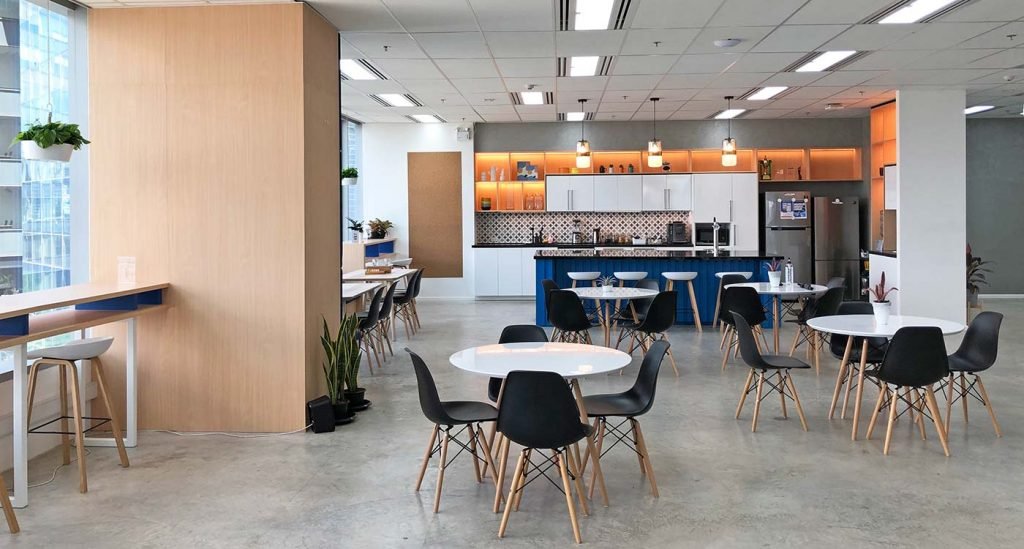
One of the strongest workplace trends throughout Asia is the shift towards hospitality-inspired offices.
The traditional reception desk is being replaced by welcoming lounges, café-style pantries and comfortable meeting spaces. Employees no longer arrive at an office—they arrive at a destination.
A well-designed workplace creates the same feeling as entering a boutique hotel: warm lighting, natural materials, comfortable furniture and an inviting atmosphere that encourages interaction.
Instead of asking people to return to work, companies are creating spaces people genuinely enjoy spending time in.
From Corporate to Residential
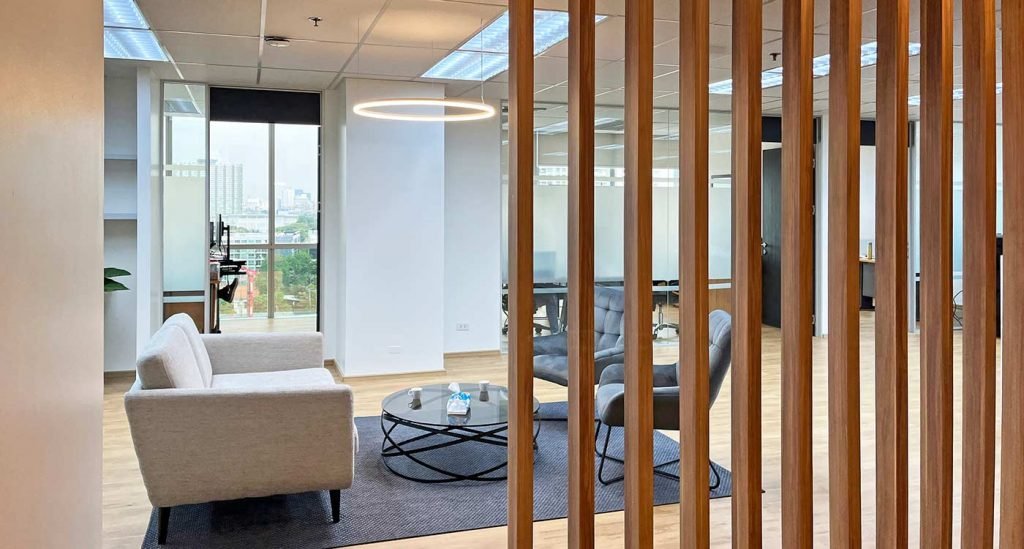
The era of cold white offices is disappearing.
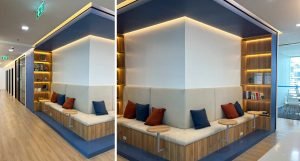
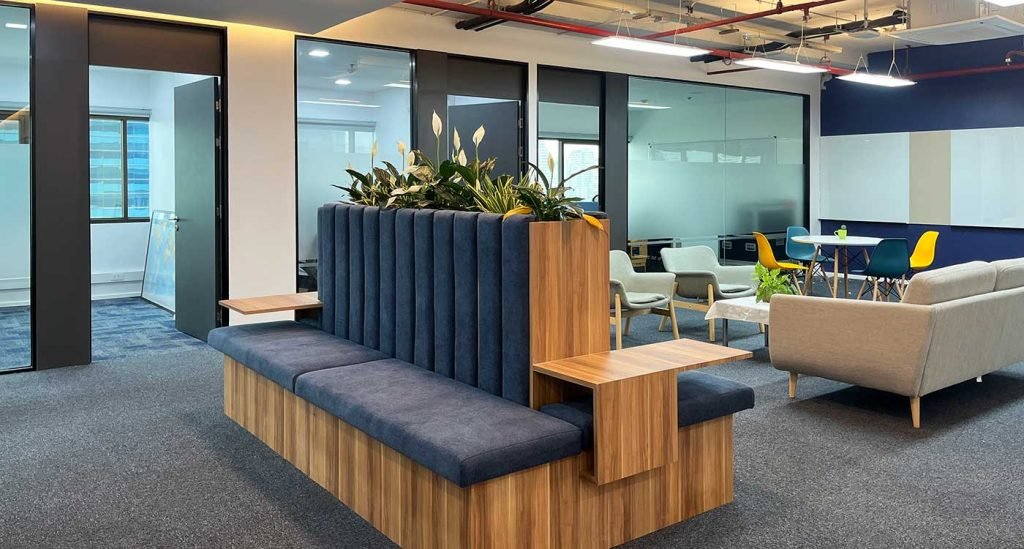
Today’s workplaces borrow many qualities from residential architecture. Timber finishes, carpets, curtains, decorative lighting, bookshelves and soft furnishings create a calmer and more comfortable environment.
These materials are not simply aesthetic choices. They improve acoustics, reduce stress and create a stronger emotional connection to the workplace.
Employees increasingly expect offices that feel welcoming rather than institutional.
Five Work Modes – One Workplace
No single desk can support every task during a working day.
A typical employee may spend one hour concentrating, another hour collaborating, then join an online meeting before having an informal discussion over coffee.
This is why regroup architecture developed the 5 Work Modes, allowing employees to choose the environment that best supports the work they are doing.

- Focus
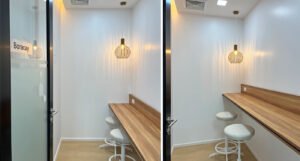
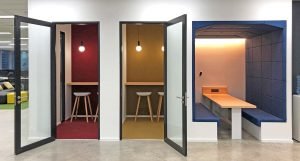
Quiet spaces for concentrated individual work.
These environments minimise distractions and provide excellent acoustic performance, allowing employees to work efficiently on tasks requiring deep concentration.

- Collaborate
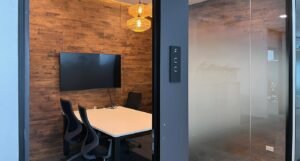
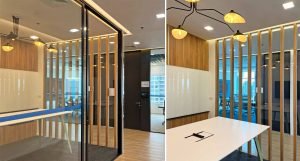
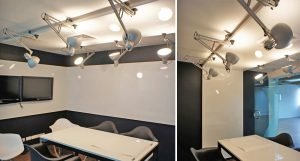
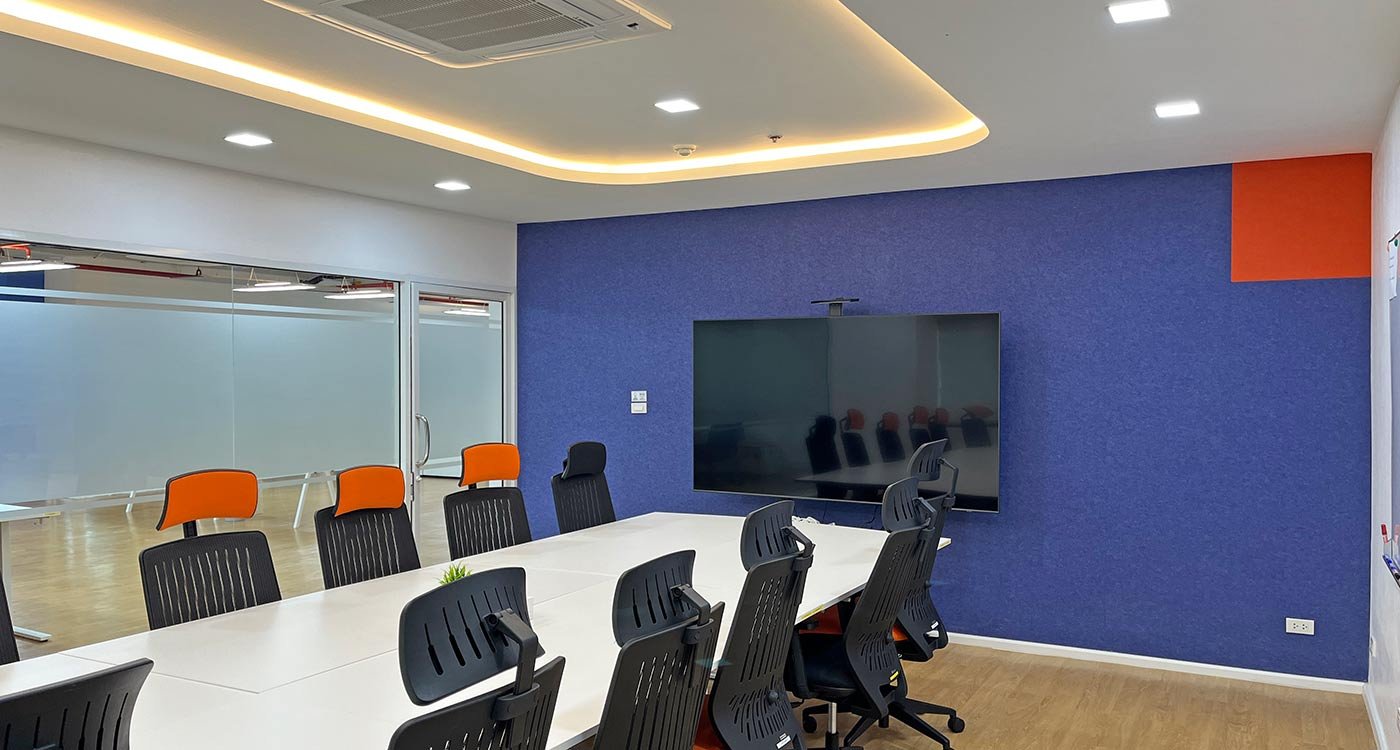
Flexible meeting areas where teams can exchange ideas, brainstorm and solve problems together.
Rather than fixed boardrooms, these spaces encourage creativity and communication.
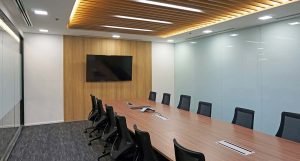
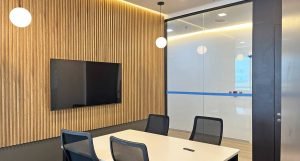
- Communicate
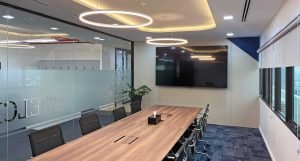
Technology-enabled spaces designed for hybrid meetings, video conferencing and presentations.
As distributed teams become normal, these environments seamlessly connect colleagues across different locations.
- Learn
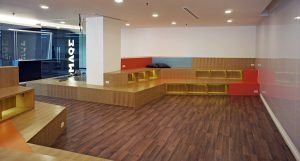
Workplaces have become continuous learning environments.
Training rooms, workshop areas and informal knowledge-sharing spaces allow organisations to develop their people while encouraging innovation.
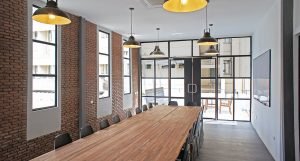
- Socialise
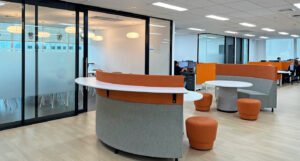
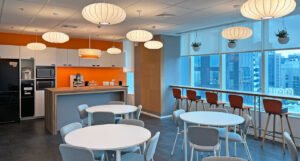
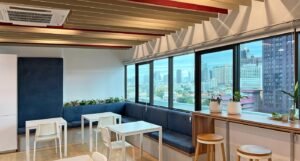
Coffee areas, lounges and breakout spaces play a far greater role than simply providing refreshments.
Many of the best ideas emerge during informal conversations. Well-designed social spaces strengthen company culture, encourage collaboration between departments and help employees build stronger relationships.
Flexibility is the New Standard
Modern offices are expected to change throughout the day.
Meeting rooms can expand using movable partitions. Lounge areas transform into presentation spaces. Training rooms become event venues.
Instead of designing fixed layouts, today’s workplace supports multiple scenarios without requiring renovation.
This flexibility extends the lifespan of the office while allowing companies to adapt as they grow.
Designing for Focus
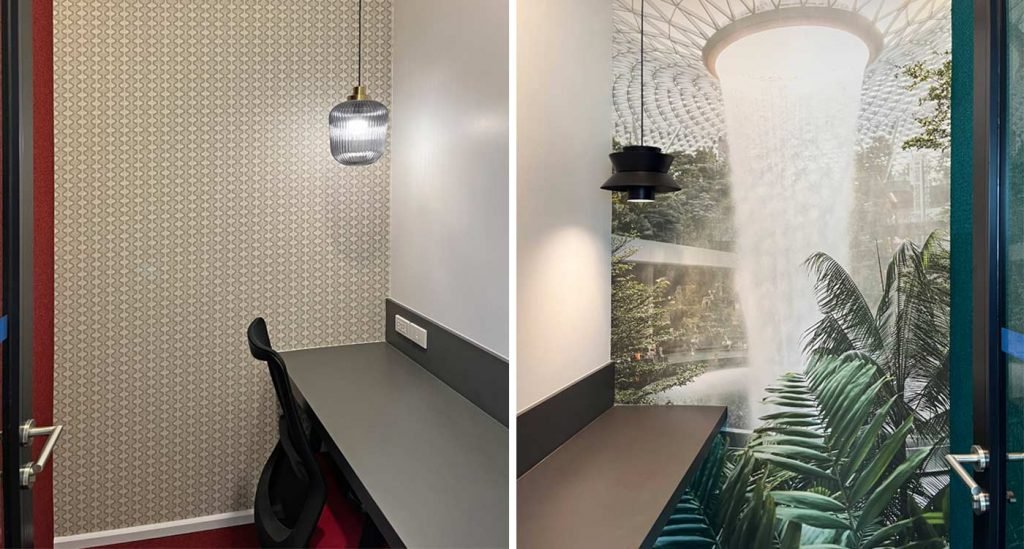
Ironically, as offices become more collaborative, quiet spaces have become more important than ever.
Open-plan workplaces encourage interaction but can also create constant distractions.
Modern offices therefore include a variety of acoustic environments:
- Focus rooms
- Phone booths
- Quiet libraries
- Small enclosed work pods
- Sound-absorbing ceilings and wall panels
The objective is not silence—it is providing employees with the choice of the right environment for the task at hand.
The Office as a Destination
The most successful workplaces no longer compete with remote working by offering free coffee or recreational facilities.
They compete by creating experiences.
An inspiring office encourages spontaneous collaboration, strengthens company culture and supports employee wellbeing while offering spaces that simply cannot be replicated at home.
This shift represents one of the biggest changes in workplace design over the last decade.
Designing Offices Around People
At regroup architecture, every workplace begins with one simple question:
How do people actually work?
By understanding behaviour before designing space, we create offices that are flexible, efficient and enjoyable to use.
Our 5 Work Modes framework continues to guide this process, integrating hospitality-inspired environments, residential comfort, flexible collaboration spaces and quiet areas for focused work into one coherent workplace ecosystem.
As office design continues to evolve across Asia, we believe the future belongs to workplaces that are not simply beautiful—but human-centred.
The best offices are no longer places where people are expected to work.
They are places where people want to work.
Our office design portfolio



Office Color Schemes: The Psychology of Productivity
Colors in the workplace influence how employees feel and perform. Some colors boost creativity and p

What Can You Change in a Bangkok Condo Floor Plan?
One of the biggest advantages of renovating a condominium is the opportunity to improve its layout.

Earthquake 2025 Bangkok – Old vs. New:
Why Were Older Condo Towers Less Affected by Interior Wall Damage?Unexpected Findings from the March